Wedding Photographer Case Guide: Protect Your Camera Gear in 2026
Wedding photographers lose $3,800 average gear per water/drop incident. This guide covers case sizing, foam layouts, and OEM custom logos for wedding photography kits.
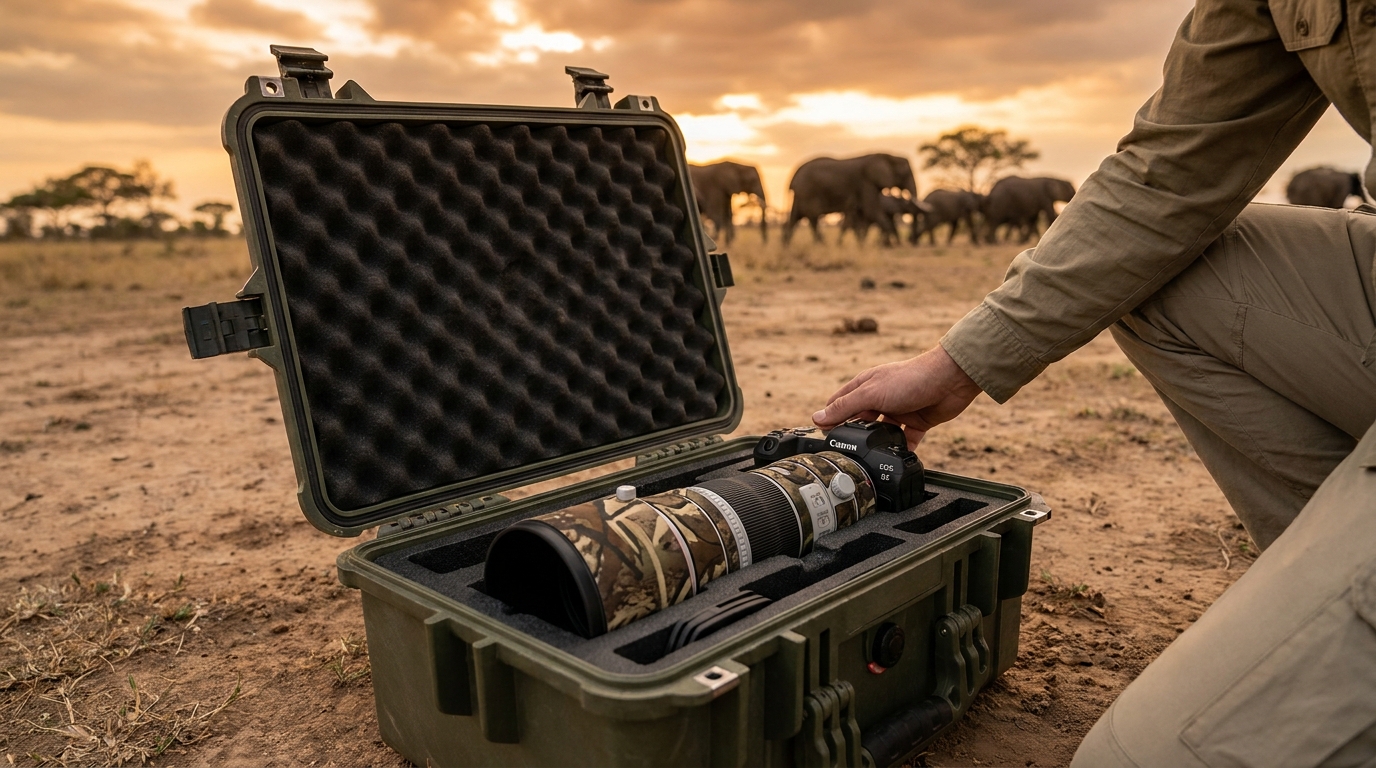
Why wedding photographers need a hard case
A wedding photographer's kit is the most exposed equipment in any event. One champagne spill, one rainstorm at an outdoor venue, one dropped Pelican at the reception — and you lose $3,000-8,000 in gear. Insurance pays out, but the missed wedding cannot be reshot.
This guide covers the three things wedding photographers get wrong when buying a hard case, and how to spec the right one for your kit.
Common mistakes
- Buying too small. You measured just the camera body. Next year you add a 70-200mm f/2.8 and a flash. Case is full. Buy 30% larger than today's kit.
- Skipping custom foam. Pre-cut pluck foam shifts. CNC foam holds gear 1:1. The $80 CNC premium is worth it for 8-10 wedding seasons.
- Ignoring weather. Outdoor ceremonies mean 30% chance of rain. IP67 isn't luxury — it's standard. Even covered ceremonies face dew, mist, and spilled drinks.
Sizing your wedding kit
Typical full-frame kit: 2 bodies (mirrorless preferred), 4-6 lenses (16-35, 24-70, 70-200, 85 prime, 100 macro, 14-24 wide), 2 flashes, batteries, cards, triggers. Total dimensions: 50cm x 35cm x 22cm typical.
Recommended case size: 60cm x 40cm x 25cm internal. This gives 5cm foam allowance per side and room for cables, gels, cleaning kit.
Foam layout for wedding work
Three layers work best:
- Top layer (lift-out): Small accessories — extra batteries, SD cards, lens cloth, sensor swabs, business cards.
- Middle layer (main): Bodies + lenses in CNC pockets. Each lens has its own pocket with diameter cut to lens barrel.
- Bottom layer (deep): Flashes, triggers, backup body, larger accessories.
Best case features for wedding photographers
- Wheels: You'll be carrying 8kg of gear through a venue. Wheels save your back.
- Telescoping handle: Mandatory if you fly with the case.
- TSA locks: You will check the case for destination weddings.
- Auto pressure valve: Cabin pressure changes at altitude can crush a sealed case. The valve equalizes.
Recommended: KeXinMaterials camera-stage-case
KeXinMaterials makes custom-fit cases for Sony A7/A9, Canon R5/R6, Nikon Z6/Z8, and 200+ other models. 12h quote, 30-day delivery, MOQ 50pcs. CNC foam included for orders above 100pcs. Email kexin@beeaa.com or WhatsApp +86 13590555309.
Need a quote for your case?
KeXinMaterials offers custom OEM/ODM cases for every vertical covered in this guide. 12h quote response, 30-day delivery, MOQ 50-300pcs. Contact us today.
Fast-Access Storage for the Wedding Day
Wedding photography is high-stakes, time-sensitive work. There's no second chance for the first kiss, the father-daughter dance, or the bouquet toss. A wedding photographer's case must: (1) Provide fast access to 3-5 cameras and 8-12 lenses in under 10 seconds, (2) Survive the rigors of 12+ hour wedding days, (3) Be discreet and professional-looking (no tactical/military aesthetic), (4) Organize memory cards, batteries, flashes, and backup gear, (5) Be airline-checkable for destination weddings, and (6) Look good in photos and at the venue.
Essential Wedding Photography Equipment
A professional wedding photographer's kit includes: (1) Two camera bodies: Sony A7R V, Canon R5, Nikon Z9 ($2,500-6,500 each), (2) 8-12 lenses: 24-70mm f/2.8, 70-200mm f/2.8, 35mm f/1.4, 85mm f/1.4, macro, wide-angle ($800-3,000 each), (3) Flashes: Profoto, Godox, Sony flash system ($300-3,000 each), (4) Memory cards: 8-16 cards at 128GB-512GB each ($50-300), (5) Spare batteries: 6-10 camera batteries, 4-6 flash batteries ($50-100 each), (6) Backup camera (older model) ($500-1,500), (7) Light modifiers: reflectors, diffusers, softboxes ($100-500), (8) Tripod, gimbal, monopod ($300-2,000). Total value: $20,000-80,000.
Wedding Day Workflow Considerations
Wedding photography cases should support the photographer's workflow: (1) Quick access to the main camera on top, with secondary cameras below, (2) Lenses arranged by focal length for quick changes, (3) Battery and memory card compartment that can be opened without disturbing the main gear, (4) A separate "emergency" compartment for backup equipment, (5) Exterior pocket for the day's timeline, shot list, and contact info, (6) Subtle lighting inside the case for low-light venues (churches, receptions).
Frequently Asked Questions
How fast can I switch between cameras?
With shadow foam and proper layout, you can switch from one camera to another in 2-3 seconds. The main camera sits in a quick-access top tray, and the second camera is positioned alongside. Lenses are arranged by use frequency.
Can I fit a 70-200mm f/2.8 with hood attached?
Yes, our wedding photographer cases include custom slots for 70-200mm lenses with hoods mounted. The cutout accommodates the lens with the hood reversed or attached. Dimensions: typically 200mm diameter x 250mm length.
How do you organize memory cards?
Use a memory card wallet (Pelican, Honshi, or similar) that holds 8-16 cards. The wallet fits in a dedicated slot in the foam. We also offer tamper-evident card cases for legal protection if a card is lost or damaged.