Underwater Photography Dive Case: Waterproof Camera Gear Storage in 2026
Underwater photographers need IP68 cases for cameras, housings, strobes, and lenses. Saltwater-rated, pressure-tested to 30m+ depths, and corrosion-resistant hardware for dive boats.
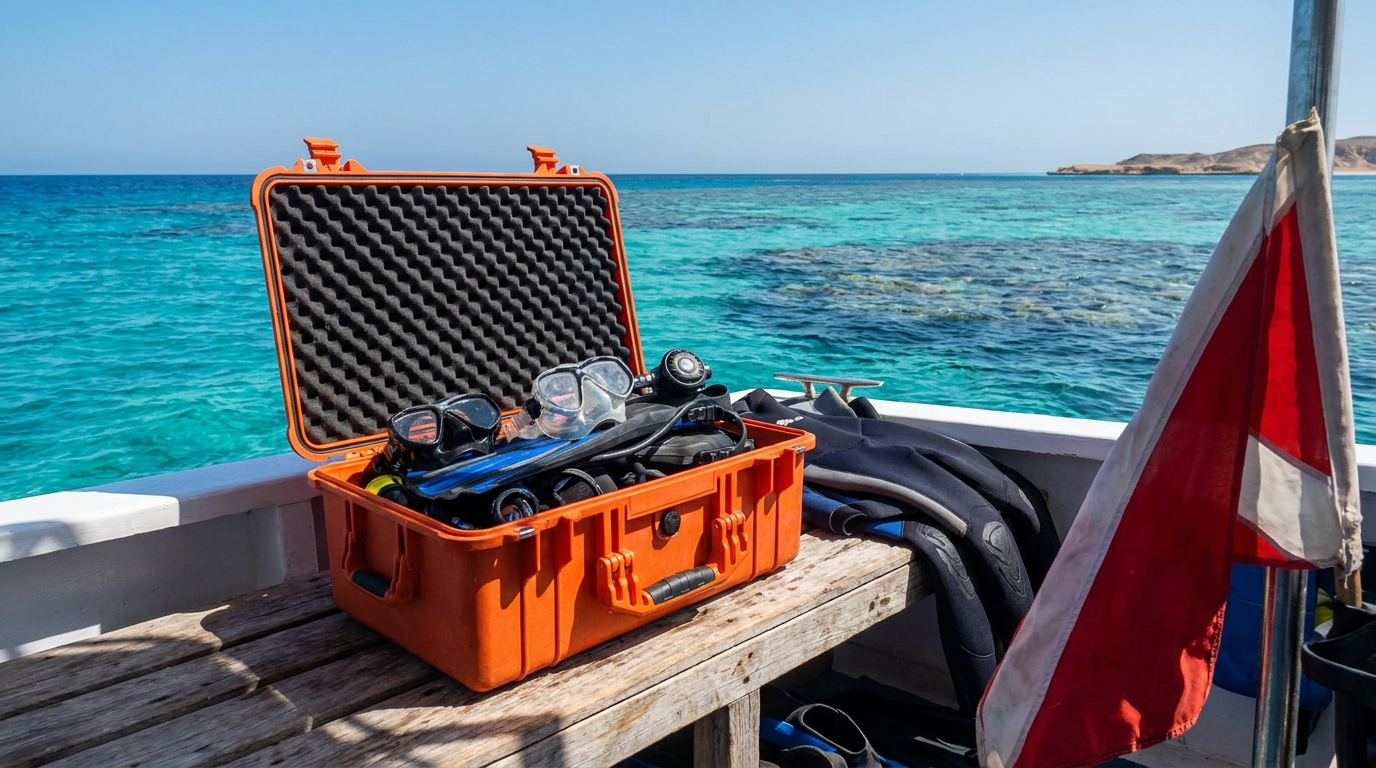
Why underwater photography cases are different
Underwater photography is among the most demanding uses of a protective case. Saltwater corrosion, depth pressure, lens condensation, and surface impact all conspire to destroy standard cases. The market is also growing: underwater photography is increasingly popular for diving, surfing, fishing, marine research, content creation, and ocean conservation.
This guide covers the four critical case types for underwater photography: camera + housing, strobes + accessories, lenses + filters, and drone + ROV.
Camera + housing cases
Underwater camera setups include a mirrorless/DSLR body inside a waterproof housing (Nauticam, Ikelite, Sea & Sea, Aquatica, Marelux). Cases must:
- IP68 rated to 30m+ (most housings rated to 60-100m)
- Saltwater-rated hardware (316 stainless steel or titanium)
- Closed-cell foam (doesn't absorb water if flooded)
- Silica gel compartment (anti-fog for housing interior)
- Custom foam for housing body + port + arms + vacuum pump
Strobe + lighting cases
Underwater strobes and video lights ($500-5,000 each) need:
- IP68 with same depth rating as housing
- Foam flotation (strobes are heavy, cases need to float if dropped)
- Charging port access (USB-C, 110V, 12V)
- Battery storage (Li-ion with UN38.3 compliance for air transport)
Lens + filter cases
Wet lenses (macro, wide-angle, fisheye), color correction filters, and dome ports need:
- Individual foam compartments (scratch protection)
- Anti-fog storage (silica gel)
- Compact size (lenses are smaller than housings)
- Quick identification (color labels for different lens types)
Drone + ROV cases
Underwater drones (PowerVision PowerRay, Gladius Mini S, Youcan Robot BW Space Pro) and ROVs (VideoRay, Deep Trekker, Saab Sea Wasp) need:
- IP68 with 100m+ depth rating (ROVs go deeper than divers)
- Foam flotation (always)
- Buoyancy considerations (ROVs are heavy, cases may need counter-weight)
- Tether storage (50-300m of cable)
What to look for in an underwater photography case
- IP68: Minimum rating (continuous immersion at 1m+)
- Depth tested: Match the case rating to your housing rating
- Saltwater resistant: 316 stainless or polymer hardware
- Float: Foam flotation upgrade (case floats when dropped)
- Anti-fog: Silica gel compartment + closed-cell foam
Recommended: KeXinMaterials dive case
KeXinMaterials offers IP68 underwater cases for cameras, strobes, lenses, and ROVs. Saltwater-rated, foam flotation, custom foam for Nauticam / Ikelite / Sea & Sea / Aquatica housings. 12h quote, 30-day delivery, MOQ 50pcs. Email kexin@beeaa.com or WhatsApp +86 13590555309.
Need a quote?
KeXinMaterials offers custom OEM/ODM cases for every application. 12h quote response, 30-day delivery, MOQ 50pcs.
Submersible Protection for Aquatic Cameras
Underwater photography demands the highest level of water protection. A dive case must: (1) Provide IP68 sealing rated for the maximum dive depth plus safety margin (typically 30-50m for recreational, 100m+ for technical), (2) Protect sensitive optics from water pressure, (3) Organize cameras, housings, lenses, strobes, and dive accessories, (4) Survive saltwater corrosion, (5) Float or be retrievable if dropped, and (6) Function with wet/dry hands in dive conditions.
Essential Dive Photography Equipment
An underwater photographer typically carries: (1) Camera body: Nikon D850/D850, Canon R5, Sony A7R V, OM System TG-7 (compact) ($1,500-6,000), (2) Housing: Aquatica, Ikelite, Nauticam, Sea & Sea, Sony MPK-URX100A ($1,500-8,000), (3) Lenses: wide-angle (fisheye 8-15mm), macro (60mm, 105mm), standard (24-70mm) ($500-3,000), (4) Strobes/Lights: Sea & Sea YS-D3, Inon Z-330, video lights ($500-2,500 each), (5) Ports, mounts, arms, trays, floats ($500-2,000), (6) Dive accessories: masks, fins, regulators, BCD, computer ($2,000-10,000). Total value: $8,000-50,000.
Depth Ratings and Testing
Standard IP67 cases are rated to 1m for 30 minutes - insufficient for diving. Our dive-rated cases are IP68 tested to specific depths: (1) Recreational diver: 30m (100ft) depth rating, (2) Technical diver: 100m (330ft), (3) Commercial diver: 300m (1000ft) with custom engineering. Each case is pressure-tested to 1.5x the rated depth. The PP copolymer shell maintains flexibility at depth while resisting compression.
Frequently Asked Questions
What depth rating do I need for recreational diving?
For recreational diving (maximum 40m/130ft), we recommend cases rated to 50m with a 10m safety margin. Our 50m-rated cases have been tested to 75m (1.5x rating) for safety.
How do you prevent the case from sinking if dropped?
Add our optional float attachment (high-visibility yellow foam float) that keeps the case at the surface. The float inflates manually or automatically on water contact. The case is also bright orange or yellow for high visibility.
What about salt water corrosion?
All metal hardware is 316L stainless steel or aluminum (no plated steel). The PP copolymer shell is naturally corrosion-resistant. After each dive, rinse the case with fresh water and dry before storage. Annual inspection of O-rings and seals is recommended.