Paramedic EMS Equipment Case: First Responder Storage in 2026
Paramedics need rapid-access cases for trauma kits, AED, drug boxes, and airway equipment. Time-to-scene is measured in seconds. A properly designed EMS case saves lives.
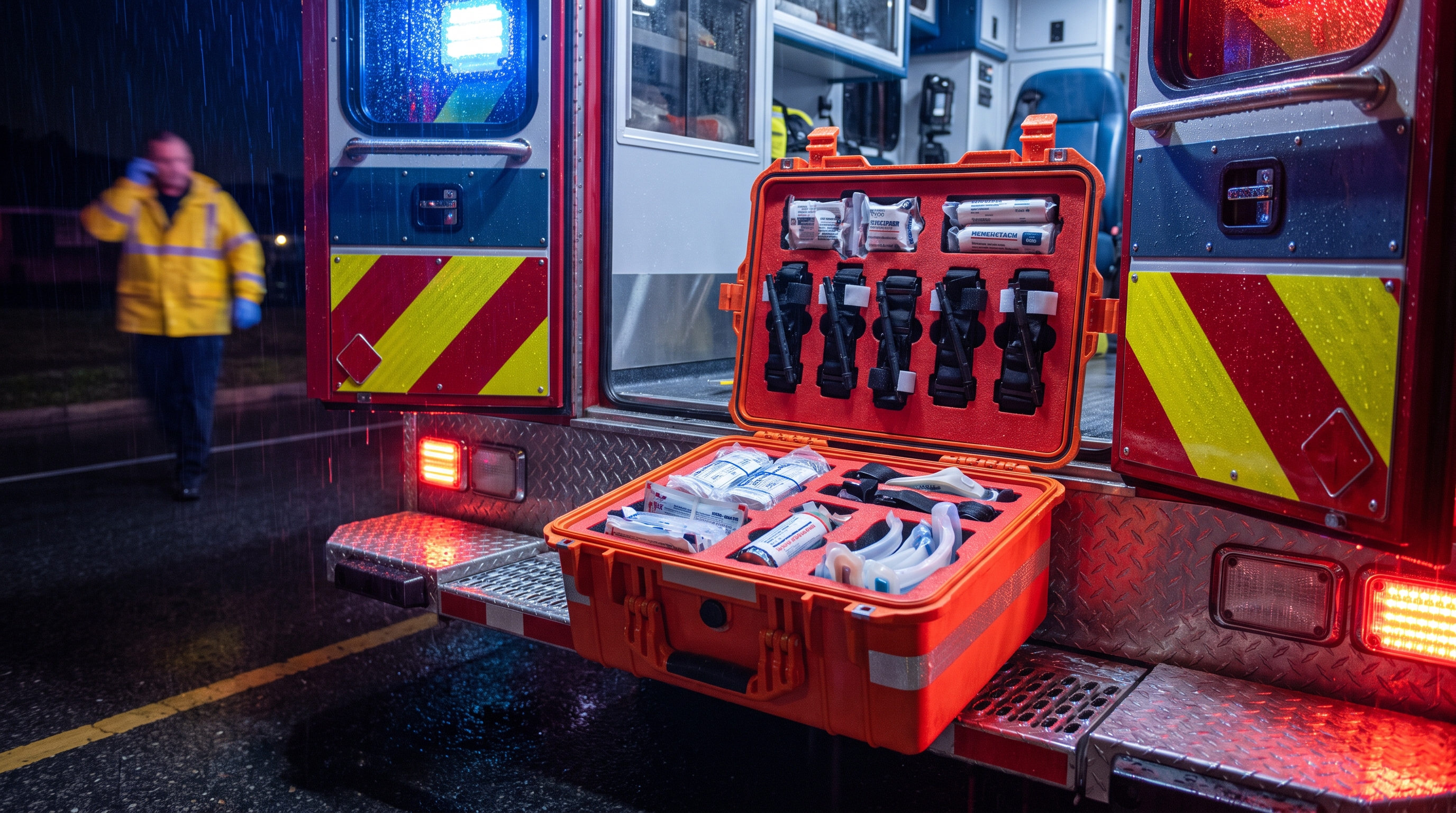
Why EMS cases are different
Paramedic equipment has unique requirements: rapid access (under 30 seconds open), single-handed operation (other hand on patient), high-visibility color, infection control (bleach wipeable), and clear content organization.
This guide covers the four critical EMS case types: trauma kit, drug box, AED, and airway equipment.
Trauma kit cases
Trauma kits contain tourniquets, hemostatic gauze, chest seals, airways, and pressure bandages. The case must:
- Open with one hand in under 5 seconds (no zippers, no twist latches that require two hands)
- Be high-visibility orange or red (DOJ/FEMA standard for emergency equipment)
- Have an organized interior (color-coded pouches or foam blocks for instant identification)
- Be wipeable with bleach or 70% alcohol (infection control)
- Be stackable on ambulance shelves
Drug box cases
Controlled substance storage (Schedule II-V: morphine, midazolam, fentanyl) requires:
- Tamper-evident seals (numbered, signed, time-stamped on a log card)
- Locking mechanism (DEA and state pharmacy board requirements)
- Chain-of-custody documentation pocket
- Temperature monitoring (data logger for insulin, epinephrine)
KeXinMaterials offers tamper-evident drug boxes with serialized seals, combination locks, and built-in thermometer pockets.
AED + cardiac cases
Automated External Defibrillators ($1,500-3,000) need:
- IP67 (rain during outdoor events, vehicle storage)
- Insulation (battery performance drops below 0 C)
- Pad visibility (pads expire every 2 years, case should show expiry)
- Clear window for status indicator
- One-hand quick access
Airway equipment cases
Bag-valve masks, supraglottic airways, endotracheal tubes, laryngoscopes, and suction devices need:
- Organized foam for instant device identification
- Bright color coding (different sizes visible at a glance)
- Sealed lid (no dust contamination)
- Lightweight (carried in addition to trauma kit)
What to look for in an EMS case
- Rapid access: Push-button latches, no zippers, single-hand operation
- High visibility: Orange, red, or yellow (OSHA/ANSI 107 standard)
- Infection control: Non-porous surface, bleach-wipeable
- Organization: Color-coded foam or pouches, instant identification
- Temperature: Optional PCM for drug storage in extreme temps
Recommended: KeXinMaterials EMS case
KeXinMaterials offers rapid-access EMS cases for trauma, drug, AED, and airway applications. Available in hi-vis orange, red, or yellow. Tamper-evident seals, combination locks, and validated temperature data loggers. 12h quote, 30-day delivery, MOQ 50pcs. Email kexin@beeaa.com or WhatsApp +86 13590555309.
Need a quote?
KeXinMaterials offers custom OEM/ODM cases for every application. 12h quote response, 30-day delivery, MOQ 50pcs.
Drug-Safe and Temperature-Controlled for EMS
Paramedic and EMS cases must meet strict requirements: (1) DEA compliance for controlled substance storage with lockable compartments, (2) Temperature control for heat-sensitive medications (epinephrine, naloxone, insulin), (3) Quick access in emergencies, (4) Hospital-grade disinfection compatibility, (5) Organization for ACLS and BLS protocols, and (6) Durability for daily ambulance use. The right case can mean the difference between effective treatment and lost seconds during cardiac arrest or trauma.
Critical EMS Equipment Categories
A paramedic case typically holds: (1) Airway: bag-valve mask, intubation kit, supraglottic airway, suction, oxygen ($500-2,000), (2) Cardiac: AED, monitor/defibrillator, ECG leads, medications (epinephrine, amiodarone, atropine, adenosine) ($2,000-15,000), (3) IV/IO: crystalloids, tubing, catheters, IO drill ($200-800), (4) Trauma: tourniquets, hemostatic gauze, chest seals, occlusive dressings, pelvic binder ($300-1,500), (5) Medications: ACLS drugs, pain management, antiemetics, bronchodilators, controlled substances (locked) ($500-5,000), (6) Pediatric equipment: Broselow tape, pediatric doses ($200-800), (7) PPE and infection control ($100-500). Total value: $5,000-25,000.
Temperature-Sensitive Medications
Many EMS drugs are temperature-sensitive: (1) Epinephrine: stable 15-30C, degrades rapidly above 40C, (2) Naloxone: stable 15-30C, (3) Insulin: requires 2-8C, (4) Nitroglycerin: stable 15-30C, sensitive to light, (5) Vaccines: 2-8C. Our temperature-controlled cases feature: (1) Insulated walls with R-value 6+, (2) PCM (Phase Change Material) panels that maintain 15-25C for 8-12 hours, (3) Digital temperature display, (4) Bluetooth temperature logger for chain of custody.
Frequently Asked Questions
How long do temperature-sensitive medications stay viable in the case?
With our PCM panels, medications stay in the 15-25C range for 8-12 hours without external power. For longer durations or extreme conditions, add battery-powered active cooling that extends protection to 24+ hours.
Are the cases compliant with DEA controlled substance storage?
Yes, we offer DEA-compliant cases with dual locking, serial-numbered locks, and key control systems. The controlled substance compartment is separate from the main case, with its own access logging if required.
How do you organize for quick access during cardiac arrest?
Use the ABCDE protocol layout: Airway at top, Breathing second, Circulation third, Drugs/Differential diagnosis fourth, Everything else fifth. Color-coded foam (red for immediate, blue for secondary) speeds access to 5-10 seconds for the most critical items.