📌 Quick Answer / 快速回答

What is a medical cold chain case?

A medical cold chain case is a temperature-controlled container for transporting vaccines, biological samples, and pharmaceuticals at 2-8°C or -20°C. WHO PQS prequalification (E001 code) is required for UN/UNICEF supply; UN3373 certification for biological samples. KeXinMaterials offers both, with 35-72 hour cold life depending on configuration.

Medical Cold Chain Case: WHO PQS, UN3373, and Vaccine Storage (2026)

Complete medical cold chain case guide: WHO PQS, UN3373 biological substance, vaccine storage, cold life, IP rating, OEM/ODM, factory pricing. For pharma, labs, NGOs.

📅 Updated: 2026-08-01 ⏱️ 3 min read ✍️ By: Wei Li (CEO, 12 years industry)
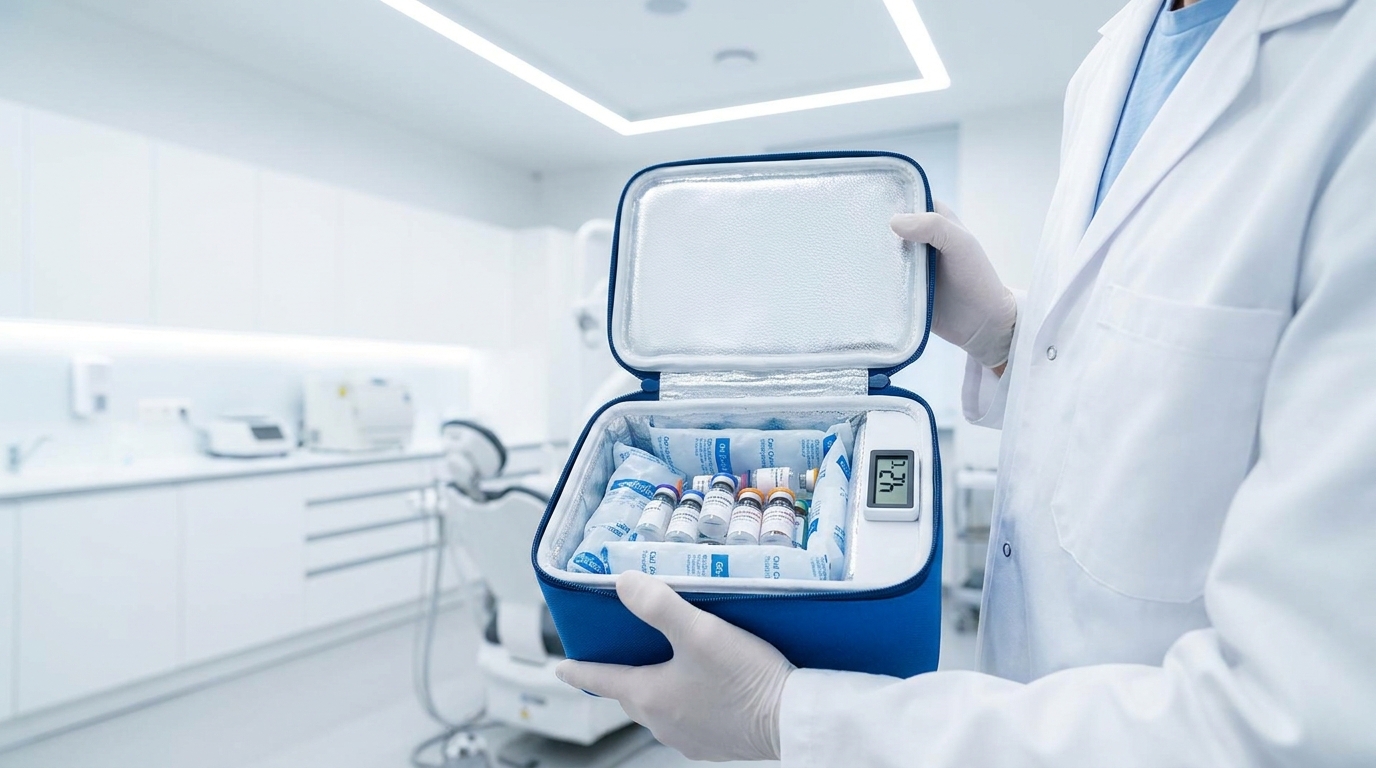
Medical professional with vaccine transport case in clinic

Cold chain logistics is one of the most demanding applications for protective cases. Vaccines, biological samples, diagnostic reagents, and pharmaceuticals must maintain strict temperature ranges (typically 2-8°C for refrigerated or -20°C to -80°C for frozen) from manufacturer to end-user. A single failure can destroy a $50,000 shipment of CAR-T therapy or render 10,000 doses of polio vaccine useless.

This guide covers the 4 main medical case types (vaccine carriers, biological sample cases, diagnostic kit cases, dental/medical device cases), the 3 critical certifications (WHO PQS, UN3373, IATA), and the engineering behind cold life, IP rating, and impact protection. Based on KeXinMaterials' 12 years of medical case experience, with active supply to UNICEF, GAVI, MSF, and 30+ pharma distributors.

Key fact: KeXinMaterials' medical cold chain cases are WHO PQS prequalified (E001 cold life 35+ hours at 2-8°C ambient 43°C) and UN3373 certified for Category B biological substances. We are one of 5 Chinese factories with WHO PQS prequalification.

4 Types of Medical Cold Chain Cases

Medical cold chain is not one product — it is a family of cases serving different temperature ranges, durations, and use cases.

1. Vaccine carriers (2-8°C, short duration)

For last-mile delivery of vaccines from regional cold store to rural clinics. Typically 1.5-10L internal volume, 24-72 hour cold life with ice packs, polypropylene outer + EPP foam insulation. WHO PQS E001 prequalified required for UN/UNICEF/GAVI procurement. Cost: $50-$200 per unit.

2. Biological sample cases (UN3373, 2-8°C or -20°C)

For transport of Category B biological substances (diagnostic samples, blood, tissue, COVID PCR samples). Must pass UN3373 drop and pressure tests. Typically 5-50L volume, fitted with absorbent material and secondary watertight container. IATA DGR compliant. Cost: $100-$500 per unit.

3. Pharmaceutical cold chain (2-8°C, long duration)

For transport of high-value biologics, insulins, mRNA vaccines, gene therapies. 50-200L volume, active compressor refrigeration or VIP (vacuum insulation panel) + dry ice. Temperature data logger required. Cost: $1,000-$10,000 per unit.

4. Medical device cases (ambient, IP67)

For transport of medical devices (ultrasound, endoscopes, surgical kits) that don't require temperature control but need IP67 sealing, drop protection, and infection control. Typically ABS or PC outer with EVA foam insert. 100% surface disinfection capable. Cost: $80-$400 per unit.

KeXinMaterials supplies all 4 categories. Browse medical case catalog →

WHO PQS, UN3373, IATA: 3 Critical Certifications

Medical cases require 3 critical certifications. Here is what each means and how to verify.

WHO PQS (Performance, Quality and Safety)

The World Health Organization's prequalification program for immunization equipment. WHO PQS prequalification means the product has passed WHO's laboratory tests and factory audit. For vaccine carriers, the relevant code is E001 (cold life ≥35 hours at 2-8°C, ambient 43°C). For cold rooms and freezers, different codes apply. The prequalification list is public: apps.who.int/immunization_standards/pqs_catalogue/. Buyer benefit: Avoid the cost and risk of independent lab testing. Accepted by UN agencies, GAVI, and most national immunization programs.

UN3373 (Biological Substance, Category B)

The United Nations classification for diagnostic specimens and biological products that are not Category A (high-risk). UN3373 packaging must pass 4 tests: drop test (1.2m), puncture test, pressure test (95 kPa), and stack test. The packaging must include the UN3373 diamond marking and the shipping name "Biological Substance, Category B." Buyer benefit: Legal compliance for international air/sea transport of biological samples. Required by IATA DGR 49 CFR 173.199.

IATA DGR (Dangerous Goods Regulations)

International Air Transport Association regulations for shipping dangerous goods. For cold chain, this includes dry ice (UN1845), lithium battery-powered data loggers, and biological substances. Cases containing dry ice must allow CO2 gas release (pressure-equalization valve) and be marked "UN1845" with the net weight. Buyer benefit: Air transport of cold chain products without seizure or fines.

At KeXinMaterials, we maintain all 3 certifications across our medical case line. Every shipment includes the relevant certificates. Request medical case samples →

Cold Life Engineering: How It Works

Cold life is the most misunderstood specification in medical cases. Here is the engineering behind it.

What is cold life?

Cold life is the time a vaccine carrier maintains its internal temperature within a specified range (typically 2-8°C) under specified ambient conditions (typically +43°C, the WHO PQS test condition). For WHO PQS E001, the minimum cold life is 35 hours.

How is it achieved?

Three engineering levers determine cold life:

  1. Insulation: Expanded polypropylene (EPP) foam is the standard. Higher density = better insulation but more weight. Typical: 35-45 kg/m³, 30-50mm thickness. Vacuum insulation panels (VIP) achieve 5x better insulation at 5x cost, used in pharmaceutical cold chain.
  2. Thermal mass: Cool packs (water-based or phase-change material, PCM) provide the cold reservoir. PCM at +5°C phase change maintains 2-8°C for longer than water ice (which drops below 0°C and risks freezing vaccines).
  3. Sealing: A poorly sealed lid can lose 30-50% of cooling capacity through air infiltration. Silicone gaskets and tight latches are critical.

Test methodology (WHO PQS E001)

The case is loaded with cool packs conditioned at +5°C. The internal temperature is monitored continuously. The case is held at +43°C ambient (simulating desert conditions). Cold life is the time from lid closure until the internal temperature first rises above +8°C. Pass criteria: ≥35 hours.

KeXinMaterials' medical cases achieve 35-72 hours cold life, depending on model and PCM configuration. Our latest prequalified model, the KX-VC-50, achieves 48 hours at WHO PQS E001 conditions. View test reports →

Frequently Asked Questions

What is IP67?

IP67 is a rating from the IEC 60529 international standard. 'IP' = Ingress Protection. The '6' means completely dustproof. The '7' means resistant to temporary water immersion (1m depth for up to 30 minutes).

What is the difference between IP67 and IP65?

IP67 can withstand temporary water immersion. IP65 can only withstand low-pressure water jets. IP67 is suitable for outdoor and marine environments; IP65 is sufficient for rain exposure.

Should I choose PP, ABS, or PC for my IP67 case?

PP is lightest, most chemical-resistant, and food-safe. ABS is harder, glossier, and easier to color-match. PC is strongest and most premium but costliest. For most applications, ABS offers the best balance.

What is the MOQ for custom IP67 cases?

At KeXinMaterials, standard SKUs are available from 50-100 pcs. Custom OEM/ODM orders start at 300 pcs.

How long does a custom IP67 case order take?

Sampling: 7-10 days. Mass production: 15-25 days. Sea freight: 25-40 days. Total: 30-45 days from deposit to your warehouse.

How do I get an IP67 test certificate?

Third-party labs like SGS, TÜV, BV, and CTI perform IP testing. Typical cost is $500-$2,000 per test. Turnaround is 7-15 days.

Can IP67 cases float?

Standard IP67 cases do not float. If you need flotation, ask for closed-cell foam inserts or external flotation collars.

What is the warranty on IP67 cases from KeXinMaterials?

1-year warranty against manufacturing defects. Lifetime technical support. Free replacement for any case that fails the IP test within 30 days of receipt.

Need an IP67 Case Quote?

KeXinMaterials source factory, 12 years of IP67 case manufacturing, 150+ SKUs across 9 product lines, exported to 50+ countries. OEM/ODM custom, 30-day delivery.

5-Step OEM Inquiry📧 Email Directly💬 WhatsApp

Related Content

OEM/ODM Case Customization Guide IP67 Protective Case Buying Guide Industry Guides
8 in-depth guides
Case Studies
20 real projects
Entity Graph
8 core concepts
Test Reports
SGS / TÜV / CTI certified