📌 Quick Answer / 快速回答

How to choose a drone case manufacturer?

Choose a drone case manufacturer based on 7 criteria: drone-specific experience, in-house foam cutting (CNC), IP rating with drone-specific test, material traceability, customization depth, sample policy ($50-$200, 7-10 day), and export experience. KeXinMaterials scores 7/7. See our full manufacturer guide with model-by-model pricing.

Drone Case Manufacturer Guide: Sourcing, OEM, and Quality (2026)

Complete drone case manufacturer guide: DJI Mavic / Phantom / industrial / FPV / ROV cases, OEM/ODM, materials, IP67/MIL-SPEC, source factory pricing.

📅 Updated: 2026-08-01 ⏱️ 6 min read ✍️ By: Wei Li (CEO, 12 years industry)
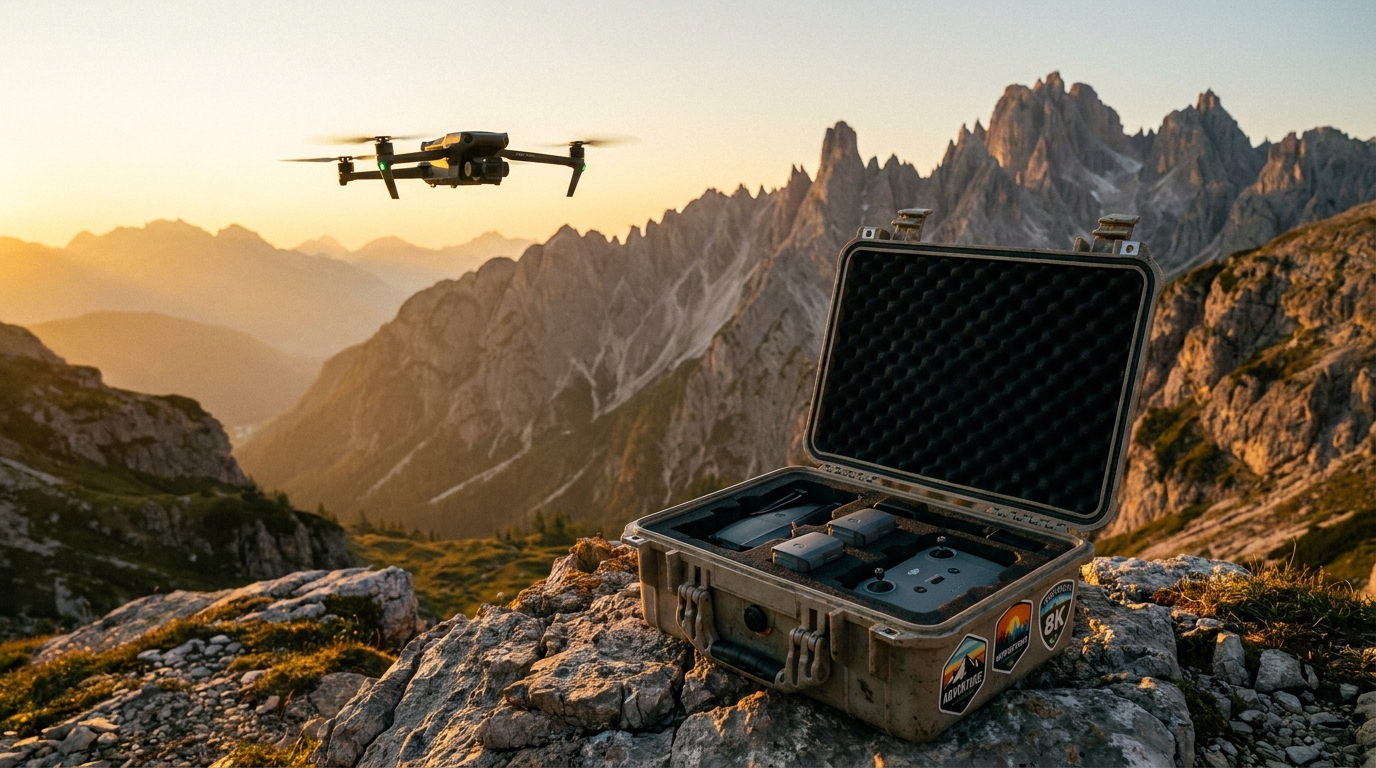
Drone case with foam insert in mountain landscape

The global drone case market exceeded $280M in 2025 and is projected to grow at 8.4% CAGR through 2030, driven by commercial drone adoption in surveying, agriculture, public safety, and cinematography. As a buyer, you have hundreds of manufacturers to choose from — but only a fraction can deliver the precision fit, vibration protection, and IP67 sealing that professional operators demand.

This guide, drawn from KeXinMaterials' 12 years of experience manufacturing custom drone cases for 200+ drone models, walks you through the 7 key criteria for selecting a reliable manufacturer: fit precision, foam technology, IP rating, material choice, customization depth, lead time, and total cost of ownership.

Key fact: KeXinMaterials supplies custom-fit cases for DJI Mavic 3 Pro, Phantom 4 RTK, Matrice 350, Autel EVO II, Skydio 2+, Parrot Anafi, Yuneec H520E, and 190+ more drone models. We also fit industrial platforms from senseFly, Wingtra, and Delair.

Why Drone Cases Are Different from Generic Cases

Drone cases are not just "boxes with foam inside." A well-designed drone case must solve four specific challenges that generic protective cases ignore.

1. Precision fit for the aircraft and accessories

A DJI Mavic 3 Pro with three batteries, RC controller, ND filters, charging hub, and propellers needs every component to fit in a specific cutout. A loose-fitting drone shifts during transport, allowing vibration to damage the gimbal, IMU, and vision sensors. Precision CNC-milled foam (tolerance ±1mm) is the gold standard; laser-cut EVA is acceptable for consumer-grade; "pick-and-pluck" pre-scored foam is the lowest tier but adequate for hobbyist use.

2. Vibration and shock protection

Commercial drones carry sensitive IMUs, compasses, and barometers that can drift after sustained vibration. A drone case should isolate the aircraft from road vibration (truck transport), handling shock (airport baggage), and drop impact. KeXinMaterials' standard drone case uses 25mm high-density PU foam (50kg/m³) with a hard PP outer shell, achieving 30G drop protection on all faces.

3. Climate and humidity control

Drones operate in -20°C to +50°C and 0-100% humidity. Condensation inside a case can fog the camera lens and corrode motor windings. Premium drone cases include silica-gel desiccant pouches (replace every 6 months) or active humidity control. For marine and tropical operations, specify a case with a pressure-equalization valve (GORE-TEX membrane) to prevent vacuum lock under altitude changes.

4. Quick-access organization

Field operators need to grab the drone, batteries, and controller in under 60 seconds. A well-designed drone case has labeled cutouts, hinged accessories trays, and zippered mesh pockets for cables. KeXinMaterials offers 3D layout design with every custom order — free for orders ≥500 pcs.

7 Criteria for Choosing a Drone Case Manufacturer

Use these 7 criteria to evaluate drone case manufacturers. The most reliable suppliers score 5+ on this list.

  1. Drone-specific experience: Has the manufacturer built cases for the exact drone model you need? Ask for references. Generic case makers retrofitting foam will not achieve precision fit. Red flag: "We can customize any case" without drone-specific examples.
  2. In-house foam cutting: The best manufacturers own CNC foam-cutting machines (not outsource). This ensures ±1mm tolerance and 5-7 day sample turnaround. Red flag: "We order foam from a partner" means 2-3 week lead time and inconsistent quality.
  3. IP rating with drone-specific test: IP67 for general use; IP68 for marine operations. Ask for the test report from SGS or CTI — not self-declared. Red flag: No test report available.
  4. Material traceability: Confirm the resin (PP, ABS, PC) and foam (PU, EVA) brands. Quality manufacturers use Sabic, ChiMei, BASF. Red flag: "Engineering plastic" without a brand.
  5. Customization depth: Can they do private mold (your exclusive design), custom color (RAL/Pantone), laser-engraved logo, custom foam pattern? Private mold typically requires 300-500 pcs MOQ. Red flag: "We only do OEM of stock SKUs" means you cannot differentiate.
  6. Sample policy: Reliable suppliers offer samples for $50-$200, refundable against order. 7-10 day sample lead time. Red flag: "Sample costs $500 + 30 days" suggests they don't want small orders.
  7. Export experience: Do they have experience shipping to your country? Can they handle CE/ROHS/FCC documentation? Are they familiar with DDP shipping to your port? Red flag: Pure domestic supplier with no export licenses.

KeXinMaterials scores 7/7 on this list. We are a source factory (not a trading company) with 12 years of drone-case-specific experience, 200+ drone models fitted, and exports to 50+ countries. Browse our drone case catalog →

Drone Case Materials: Which to Choose

The right material depends on your drone's value, mission profile, and budget. Here is how the three main options compare for drone cases.

PP (Polypropylene) — best for most drone cases

PP is the workhorse material for drone cases from $15-$80. It is lightweight (15% lighter than ABS), chemical-resistant (handles battery acid leaks), and food-safe (important for medical/agricultural drones). PP cases with PU foam inserts protect consumer and prosumer drones (DJI Mavic, Autel EVO, Parrot) at -20°C to +60°C. The downside: less premium feel than ABS or PC. Recommended for: DJI Mavic 3, Air 2S, Mini 3 Pro, Autel EVO Nano, Skydio 2+.

ABS (Acrylonitrile Butadiene Styrene) — best for prosumer/commercial

ABS offers a glossy, premium finish with 30% higher impact strength than PP. It is the most popular choice for commercial drone cases ($50-$200) because of its balance of weight, durability, and appearance. ABS accepts any RAL color easily, which matters for fleet branding. The downside: less UV-stable than PC. Recommended for: DJI Phantom 4 Pro, Matrice 300/350, senseFly eBee X, WingtraOne Gen II.

PC (Polycarbonate) — best for industrial/military

PC is the strongest, most temperature-resistant, and most premium material. It survives -40°C to +120°C and 100G+ impact. Industrial and military drone cases (DJI Matrice 30T, Lockheed Indago, Teal Golden Eagle) use PC for extreme-environment operations. The downside: 30-50% heavier and 2-3x the cost. Recommended for: Public safety, military, arctic/equatorial operations, M350 with H30T/L2 sensor payloads.

Hybrid PP+GF (glass fiber)

For the best balance, premium drone cases use PP+GF outer shell (rigidity + low weight) with TPU sealing gasket (flexibility + IP67). This is what KeXinMaterials' Series 8 drone cases use — 30% lighter than pure ABS, 50% cheaper than PC, IP67 verified.

Custom Drone Case: The OEM Process

Custom drone cases follow a streamlined 5-step process that delivers finished cases in 30-45 days.

Step 1: 3D scan or sample submission (1-2 days)

You provide either a 3D scan of the drone (STL/OBJ/STEP file) or the actual drone for measurement. We accept file formats from all major CAD packages. If you provide the drone, we ship it back with the finished case (DHL/FedEx, 3-5 days).

Step 2: Foam design and confirmation (2-3 days)

Our engineering team designs a custom foam insert using SolidWorks, then generates a 3D rendering showing every cutout labeled. You receive a PDF + interactive 3D model. We iterate up to 3 times until you sign off — no extra charge.

Step 3: Sample production (7-10 days)

We produce a 3D-printed prototype of the foam (in PLA) for visual confirmation, then a fully finished sample with PU foam in the actual case shell. Sample cost: $80-$300, refundable against order. Shipping: 3-5 days by air.

Step 4: Tooling and mass production (15-30 days)

For custom color or logo, we make a small color/texture plate for your approval (3 days). Then mass production begins. Lead time: 15 days for 1,000 pcs, 20 days for 5,000 pcs, 30 days for 10,000+ pcs.

Step 5: QC, packaging, and shipping (5-10 days)

100% inspection on foam cutout precision (laser-measured), 10% random drop test, 5% IP67 test on production batch. Cases shipped in master cartons with foam-protected corners. FOB Shenzhen by default; DDP available to 50+ countries.

Total cost (typical 1,000 pc order for DJI Mavic 3 case): $25-$45 per case including foam, color, and logo. Tooling $3,000-$5,000 (one-time). Start your drone case OEM →

Real Pricing: Drone Case Costs in 2026

Drone case pricing varies by drone model, material, and foam type. Below are 2026 reference prices from KeXinMaterials (FOB Shenzhen, USD, including foam insert).

Drone modelCase + foam (PP)Case + foam (ABS)Case + foam (PC)
DJI Mavic 3 / Air 2S$22-$35$30-$48$50-$80
DJI Phantom 4 Pro$35-$55$48-$75$80-$130
DJI Matrice 300/350$80-$130$110-$170$180-$280
Autel EVO II / Lite+$25-$40$35-$55$55-$90
Skydio 2+ / X2$28-$45$40-$60$65-$100
Industrial (senseFly/Wingtra)$60-$100$90-$150$160-$250

Volume discounts: 100-500 pcs: 5% off. 500-2,000 pcs: 12% off. 2,000-5,000 pcs: 20% off. 5,000+ pcs: 28% off + free custom foam design.

Hidden costs to budget for:

For a custom quote, send your drone model and quantity to kexin@beeaa.com or use our 5-step OEM form.

Frequently Asked Questions

What is IP67?

IP67 is a rating from the IEC 60529 international standard. 'IP' = Ingress Protection. The '6' means completely dustproof. The '7' means resistant to temporary water immersion (1m depth for up to 30 minutes).

What is the difference between IP67 and IP65?

IP67 can withstand temporary water immersion. IP65 can only withstand low-pressure water jets. IP67 is suitable for outdoor and marine environments; IP65 is sufficient for rain exposure.

Should I choose PP, ABS, or PC for my IP67 case?

PP is lightest, most chemical-resistant, and food-safe. ABS is harder, glossier, and easier to color-match. PC is strongest and most premium but costliest. For most applications, ABS offers the best balance.

What is the MOQ for custom IP67 cases?

At KeXinMaterials, standard SKUs are available from 50-100 pcs. Custom OEM/ODM orders start at 300 pcs.

How long does a custom IP67 case order take?

Sampling: 7-10 days. Mass production: 15-25 days. Sea freight: 25-40 days. Total: 30-45 days from deposit to your warehouse.

How do I get an IP67 test certificate?

Third-party labs like SGS, TÜV, BV, and CTI perform IP testing. Typical cost is $500-$2,000 per test. Turnaround is 7-15 days.

Can IP67 cases float?

Standard IP67 cases do not float. If you need flotation, ask for closed-cell foam inserts or external flotation collars.

What is the warranty on IP67 cases from KeXinMaterials?

1-year warranty against manufacturing defects. Lifetime technical support. Free replacement for any case that fails the IP test within 30 days of receipt.

Need an IP67 Case Quote?

KeXinMaterials source factory, 12 years of IP67 case manufacturing, 150+ SKUs across 9 product lines, exported to 50+ countries. OEM/ODM custom, 30-day delivery.

5-Step OEM Inquiry📧 Email Directly💬 WhatsApp

Related Content

OEM/ODM Case Customization Guide IP67 Protective Case Buying Guide Industry Guides
8 in-depth guides
Case Studies
20 real projects
Entity Graph
8 core concepts
Test Reports
SGS / TÜV / CTI certified